- Have any questions?
- 407-663-0005
- InspiritEsthetics@gmail.com
The Top 10 Most Common Skincare Myths — And What’s Actually True

Ingredients Every Facial Specialist Should Know
December 7, 2025
How to Become a Licensed Facial Specialist in Orlando, FL (Step-by-Step Guide)
December 7, 2025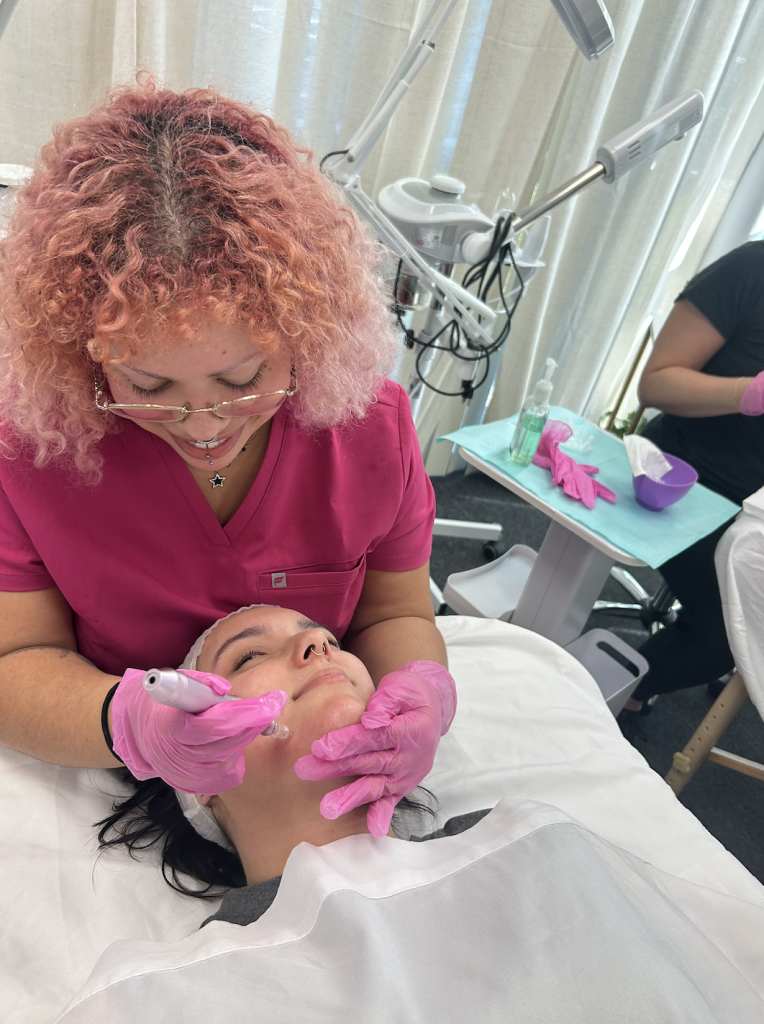
The beauty world is full of advice — but not all of it is accurate. As trends spread quickly on TikTok, Instagram, and YouTube, it can be hard to know what’s actually good for your skin. At Inspirit School of Healing Arts in Orlando, we teach our Facial Specialist students how to understand the skin on a professional level, beyond trends and misinformation.
Here are the top 10 most common skincare myths, why people believe them, and what the science and esthetics world say is actually true.
⸻
1. Myth: “If it burns or tingles, it means it’s working.”
Truth: Burning is usually a sign of irritation, not effectiveness.
Many people confuse tingling with results — but trained estheticians know that burning often indicates barrier damage, over-exfoliation, or inflammation.
Some professional treatments (like chemical peels) may produce mild tingling, but everyday skincare should not sting.
Healthy skin = calm, balanced, and strong.
⸻
2. Myth: “You only need sunscreen on sunny days.”
Truth: UV damage happens every day, even indoors.
Up to 80% of UV rays penetrate clouds, and UVA rays pass through windows — aging the skin, breaking down collagen, and increasing pigmentation.
Daily sunscreen is the #1 anti-aging practice.
⸻
3. Myth: “Oily skin doesn’t need moisturizer.”
Truth: Oily skin can actually be dehydrated — and needs hydration to balance.
When skin lacks water, it produces more oil to compensate. Moisturizers help regulate oil production, calm inflammation, and protect the barrier.
Choose lightweight, non-comedogenic hydrators.
⸻
4. Myth: “Natural products are always safer.”
Truth: Natural doesn’t always mean gentle — and synthetic doesn’t mean harmful.
Poison ivy is natural, too — but we wouldn’t rub it on our face.
Professional estheticians learn ingredient chemistry for a reason:
Some natural ingredients can irritate the skin, while many lab-created ones are more stable, safer, and specifically designed to work with skin physiology.
Balance is key — not fear.
⸻
5. Myth: “Pores can open and close.”
Truth: Pores don’t have muscles — they cannot open or close.
Steam softens debris, making extractions easier, but it doesn’t “open” pores.
Cold water may temporarily tighten the appearance, but it doesn’t close them.
The real way to minimize pores?
Consistent exfoliation + proper hydration + sunscreen.
⸻
6. Myth: “The more products you use, the better.”
Truth: Over-layering can irritate and overwhelm the skin barrier.
Using too many actives (retinol, acids, vitamin C) can cause redness, peeling, and inflammation — the opposite of healthy skin.
Professional skincare routines focus on:
 consistency
simplicity
ingredients that complement each other
Your skin thrives when it’s not overloaded.
⸻
7. Myth: “Your skin should be squeaky clean after washing.”
Truth: ‘Squeaky’ usually means stripped — not healthy.
If your skin feels tight after cleansing, your cleanser is too harsh. This can disrupt the acid mantle, leading to breakouts, dryness, and premature aging.
Choose gentle, pH-balanced cleansers that clean without damaging the barrier.
⸻
8. Myth: “You can get rid of pores completely.”
Truth: Pores are necessary — and you can’t erase them.
Pores allow oil to reach the surface and protect your skin. You can reduce their appearance, but you cannot remove them.
Professional treatments that help include:
• Chemical peels
• Exfoliation
• Microdermabrasion
• Facial steaming + extractions
• LED therapy
But remember: smooth-looking skin still has pores.
⸻
9. Myth: “Expensive products work better.”
Truth: Effectiveness depends on ingredients — not price.
Luxury packaging doesn’t guarantee results.
Some drugstore products outperform high-end brands because of ingredient concentration and formulation.
Estheticians are trained to evaluate:
 ingredient lists
percentages
delivery systems
skin physiology
Not marketing claims.
⸻
10. Myth: “You can scrub away acne.”
Truth: Aggressive exfoliation makes acne worse.
Over-scrubbing damages the skin, increases inflammation, and spreads bacteria.
Acne improves with gentle, consistent, evidence-based skincare:
• chemical exfoliants (AHA/BHA)
• proper cleansing
• hydration
• non-comedogenic products
• professional treatments
And — most importantly — not picking.
⸻
Conclusion: Knowledge = Confidence + Beautiful Skin
Understanding what’s true (and what isn’t) helps you make better skincare decisions — whether you’re a professional esthetician or simply someone who loves taking care of your skin.
At Inspirit School of Healing Arts in Orlando, our 260-hour Facial Specialist Program teaches students the science behind skincare, advanced hands-on techniques, real-world client experience, and how to become successful professionals in the beauty and wellness industry.
If you’re considering becoming a licensed Facial Specialist in Florida, we’d love to guide you on your journey.